Proposed South Deck Project
The proposed South Deck pool project is a mix of mandatory maintenance/repairs and improvements. Since there are significant existing repair and maintenance issues with the pool and its equipment, the Building Committee has requested the Legal Committee discusses these concerns with legal counsel and contractors to determine to what extent the proposed project must be approved by a vote of the owners. An engineering study has been ordered and has been conducted to properly evaluate the South Deck and Pool and related mechanical systems. The report summary will be presented to the Directors for their review.
The Building Committee and Ad Hoc Hardscape Landscape Committee are seeking as much input from owners as possible. This is the reason the Committees have utilized surveys and provided architectural renderings related to the project. This is a challenging process as so many divergent requests have been made and expressed regarding the use of the south deck and pool space.
From original Deck WebSite <
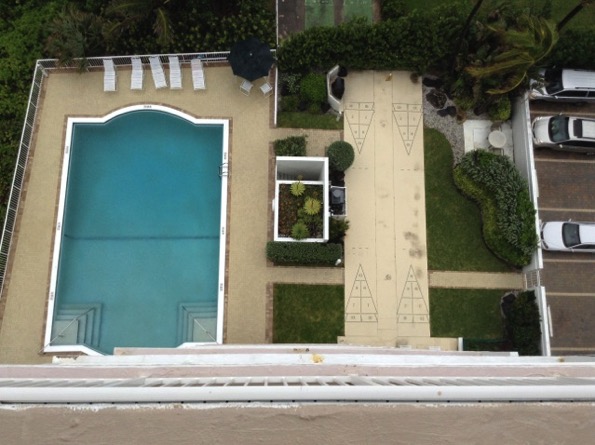
There are numerous structural deficiencies and cracking concrete and land grade issues in and on the South Deck. 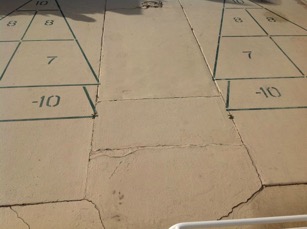
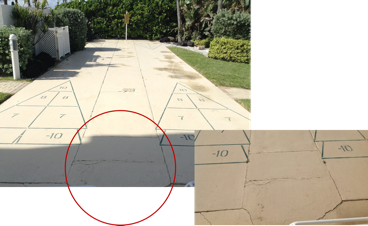
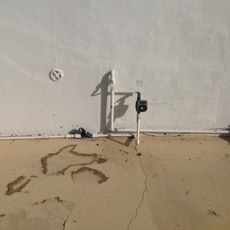
44 Year old south deck concrete structures and concrete surface slabs are cracking and previous concrete patches remain un-level and raised in areas and present trip and fall obstacles especially for wet or sandal covered feet. The shuffleboard court is also cracked in numerous locations and is idle 99% + of the time and is occupying highly valued prime real estate around our pool area. 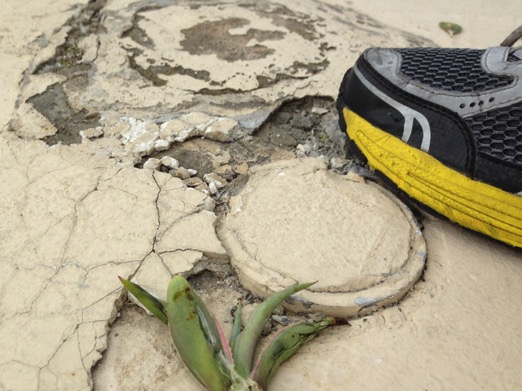
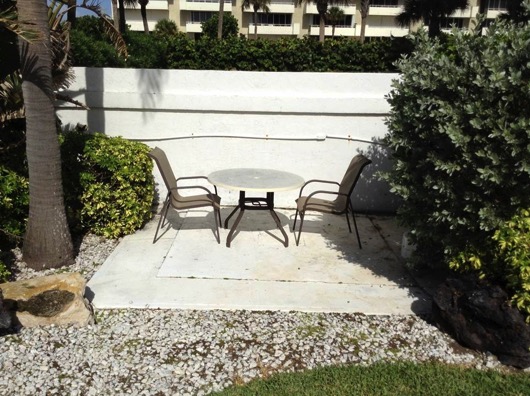
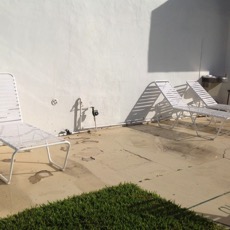
The concrete slab for the sole table and chairs in this area is cracked as well as significantly un-level and on a downhill slope from south to north. The table and chairs here are in severe disrepair and not complimentary or inviting. This is additional wasted prime oceanfront real estate.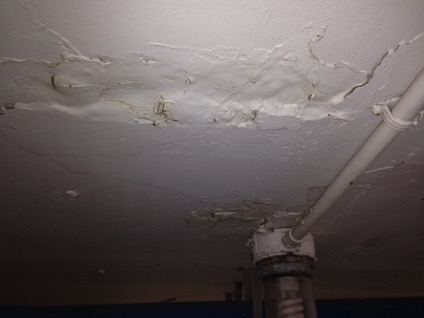
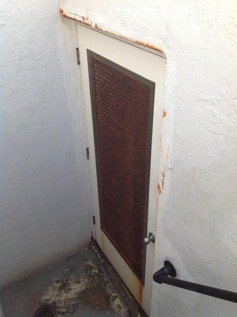
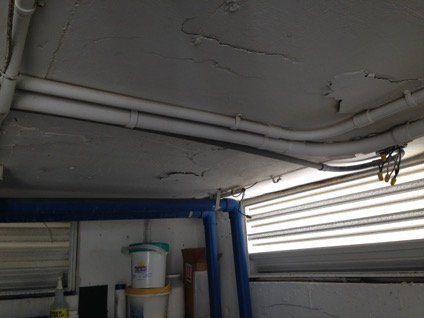
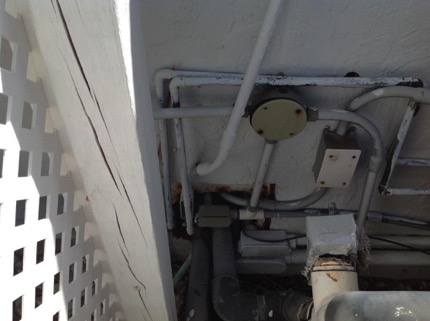
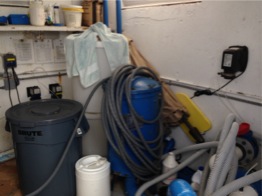
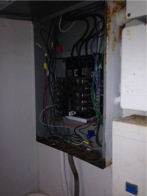
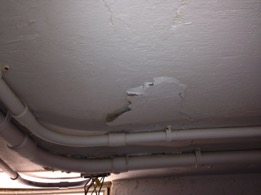
The pool equipment house with its rusted out steel door and frame are in disrepair. The entire concrete roof of the pool room house is spalling and the concrete walls are chlorine impregnated and contaminated due to lack of ventilation for 44 years and this is an engineering concern. The roof requires new waterproofing and extensive concrete rehabilitation yet there is no drain on the roof planter structure. This is a significant design problem disclosed by our engineer. The metal door and frame are rusted out and require replacement. Exposed electrical conduits and junction boxes and water lines are crisscrossing and running in all directions. These repairs are in the tens of thousands of dollars just to repair and return back the substandard concrete pool house design.
The pool pump located in this house is extremely noisy and the sound amplifies from the pool room and fills the entire deck area with the loud perpetual whine of a grinding motor. One cannot enjoy the peace and tranquility of the ocean or pool area within a 25 foot perimeter of the pool house which is most of the area surrounding the pool deck. It is suggested you request one of our staff while they are in the pool area to simply turn off the pump for you for a minute so you may hear the sharp contrast of this perpetually running noise factor removed, with your own ears. 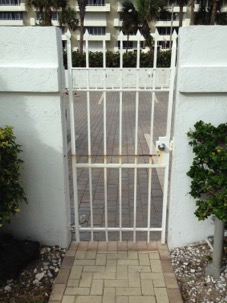
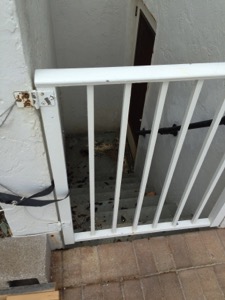
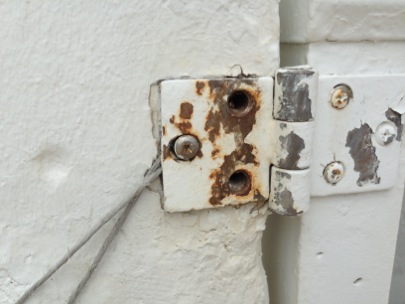
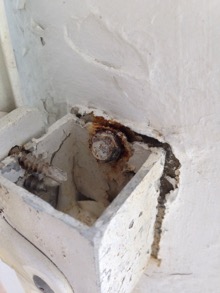
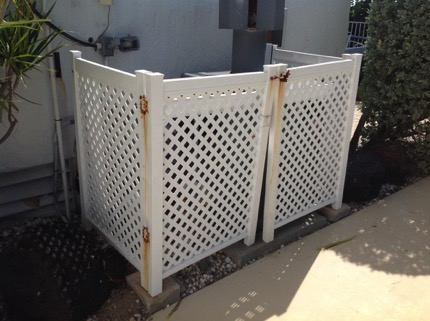
The gas supply line for the grill and pool heater is deteriorated and must be replaced, (you may have already noticed this extremely costly line repair and many other items on the deferred maintenance summary which was included in your budget packet). The Western entrance gate to the pool is undersized in width and always a challenge for construction and landscape crews to navigate large equipment through to access the rear of the building or beach area for repairs or maintenance. This is the only on-grade entrance on the property. This is the opportunity to widen this gate and provide appropriate equipment access when needed for the entire deck and beach service areas. The pool house entry gates are not fastening properly to the structural concrete and are failing to spring close and often remain sprung open which present not only code concerns but danger to children who may gain access to the pool area unaccompanied by an adult or fall down the deep stairs of the pool mechanical room.
A third of the entire land section of the western half of the pool deck is pitched steeply downward toward the parking lot and is unusable with this step downhill grade as it currently is configured and graded. Exposed plumbing and electrical lines are visible along all concrete structures and this is unsightly as many of these elements were retrofitted into our property and were never considered nor present in a comprehensive master design plan.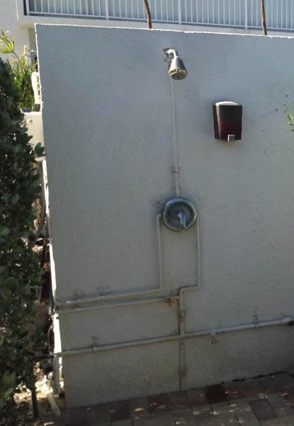
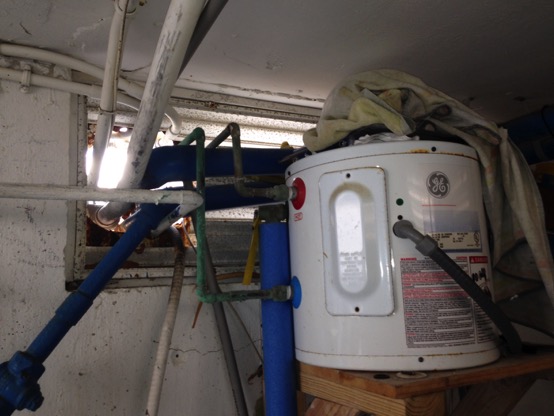
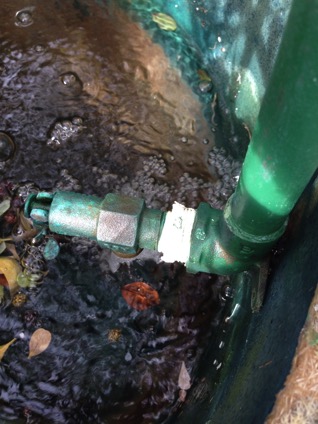
The pool shower area is a amalgamation of 44 years of plumbing and electrical retrofits. Crisscrossing electrical and water conduits are visible everywhere. The small water heater capacity offers one limited warm shower and all subsequent showers for subsequent other users are cold water only, until this small tank refills hours later. Right next to the shower is the exposed pool reservoir collector tank which is perpetually running and filling to accommodate for the 60,000 gallon per month heated chlorinated water leak we must address.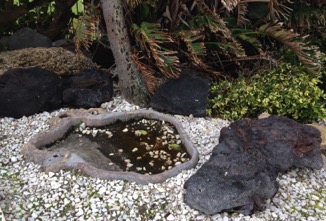
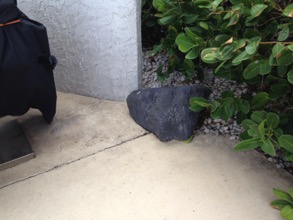
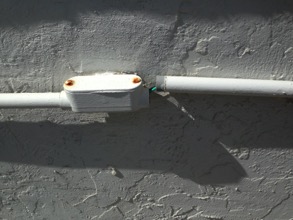
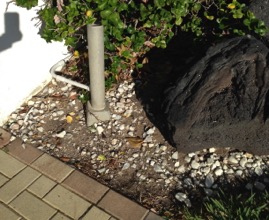
Numerous other features are in disrepair and require replacement such as, exposed electrical wires, terminated lamp posts and 44 year old antiquated landscape features and fake rocks.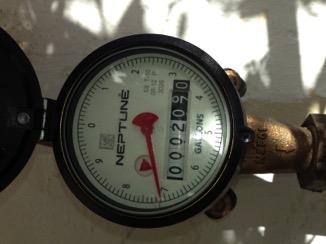
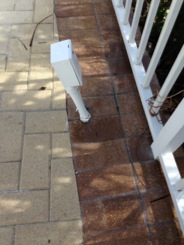
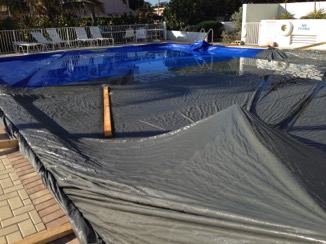
*The underground pool plumbing system is leaking. This is a concern and has been noted by our pool and engineering professionals as the fill tank is constantly running and adding water to the pool system 24/7. The supply and return pipes and joint connections to the pool are all deep underground beneath the concrete and these couplings are 44 years old and the water fill tank is perpetually filling with water even as the pool water remains at full levels with a construction tarp currently in place eliminating any water evaporation and day after day of additional rain. The pool is surrounded by a concrete skimmer system that can also develop leaks at anytime. The leak locations have not all been identified but a recently installed water meter is indicating over 2000 gal/day of heated, chlorinated pool water are being lost or 60,000 gallons per month. This is substantial. This is an environmental as well as a structural concern considering this water is infiltrating the sand substrate which supports the pool shell which is lying upon it. One identified leak is likely from the in pool lighting system (water is percolating up like a bubbling spring through the electrical outlet receptacle junction box conduit 6 feet from the pool edge), other possibilities are the supply tank or supply lines to the pool, or the drain lines from the pool. This is a 44 year old cement pool sitting in the sand in Florida with 44 year old buried plumbing. The pool interior Diamond-Brite protective surface is showing patchy areas and will soon require resurfacing.
There are numerous and pervasive mechanical deficiencies throughout the pool equipment area.
Outdated and inefficient pool mechanical equipment, a rusting gas supply line supplying both the pool heater and the grill need replacement, unlatched child entry safety gates, and numerous other features are in disrepair and require replacement, repairs, or being addressed otherwise.
These items all add up in tens of thousands of dollars of repair and wasteful excessive use of energy. In our case it is much like repairing a 44 year old model vehicle. Does it make sense to continue to repair and replace each and every failing element all of which are substantial capital expenses which repairs will add zero value to our property, or use the opportunity to repair and redesign the entire south deck and enjoy a rebuilt modern and efficient pool area to last the next 40 years?
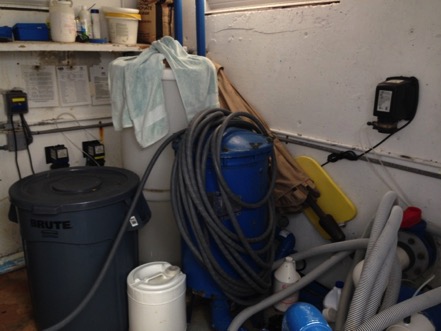
The Pool Mechanical Room is a tangle of inefficiency and cluttered with outdated equipment utilizing the technologies of days long past.
*Filtration technologies, heating technologies, and water chemistry technologies have advanced so many generations forward beyond our old systems that we are actually losing money in inefficient equipment which also eats up staff maintenance hours at a cost to us as well as being energy inefficient.
*Modern filtering systems will save us on the 26 labor cycles of hand cleaning 42 cartridges each cycle/per year. More importantly sand filtration eliminates our outdated paper cartridge replacement filters for a 10 year, not the 1 year paper filter life we currently realize and produces much cleaner and clearer water.
*Salt water technology purification systems will eliminate our liquid chlorine expense and the hazard of storing and refilling our massive and hazardous 55 gallon of oxidizing chlorine drums and replacing them with safe to store salt. The quality and feel of the water of a salt water pool is far gentler on the body and skin and is now commonplace.
*Geothermal pool heaters will save us 74% in energy usage. Our gas heaters cost us $4-5k and we replace them every 4 years in our salt environment. A geothermal heater pays for itself it savings in 3.18 years. With a 20 year life expectancy a geothermal system enables a 31.48% Return on Investment or stated differently $230,000.00 in savings over 20 years. Most importantly a geothermal system cools the pool in the summer offering a refreshing swimming experience in the hot Florida summer offering a pleasant pool temperature and reducing if not eliminating the annual black algae bloom we experience that we currently must treat with and resort to harsh chemical algaecides.
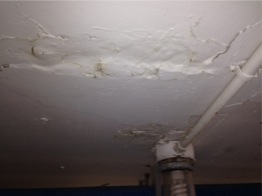
At some point when faced with so many repairs on a design and technology that is so outdated, the repair and the ongoing maintenance costs to still have and continue to maintain outdated technology and systems just does not make economic sense. The term spending good money after bad comes to mind.
Does it make good sense to wait for full pool failure, and should we continue to repair or replace expensive short lived heaters, cartridges, liquid chlorine, be dependent on gas fuel, that are not even efficient? This and now is a once in 20 year opportunity to modernize, when the pool may likely be closed for periods during the deck project especially if winds are blowing from the North during demolition. 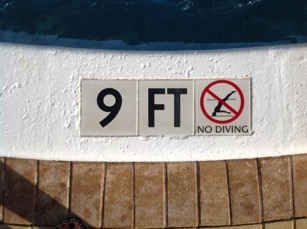
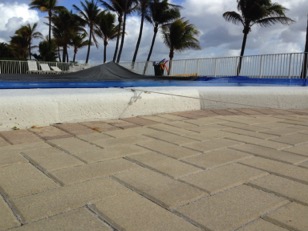 modern pool coping >>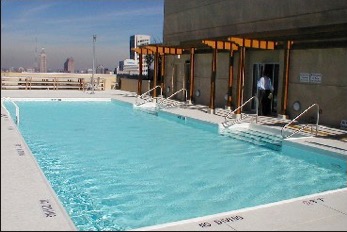
*The current pool itself is 9 feet deep in the southern end yet allows no diving and this 1/2 of the pool cannot be utilized by certain people. We are heating 3-4+ feet of water for absolutely no reason. The pool surface is unprotected from the north and east winds and suffers massive heat loss in windy fall and winter days and nights. A glass railing as our hi-rise neighbors immediately to the north have not only greatly helps to reduce the surface heat loss and keep the pool warmer, it is a stunning architectural feature that greatly amplifies the beautiful ocean views.
*Our pool and its coping is outdated and 5 inches high and is an encumbrance for children and adults with ambulation concerns. One has to literally step up and over the curb to enter and exit the pool. This not only creates an obstacle entering and exiting, it imposes a potential liability. Modern pools (for the past 10+ years) all have coping that is flush or almost flush with the surface. (Notice the above illustration above of a flush coping for comparison). Our coping requires re-painting 4x a year closing the pool for 1-2 days, each time, and then takes a staff member excessive time to hand clean it a few times a week and it still looks dirty immediately after. This perpetual staff maintenance can be eliminated with a modern flush coping as well as mitigating the entry and exit step over hazard.
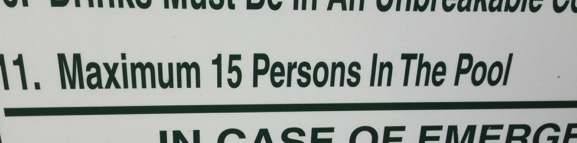
*The current pool is small and this is the ideal time to enlarge it. The space is available and this would add substantial value to the property and increase its appeal for resale. The south deck is by far the most utilized amenity on our property. The pool is also by far the most utilized amenity on our property and sometimes the Bather Load, (number of people in pool) actually exceeds the 15 person maximum limit, even during off season, that our current pool size permits by the Florida Department of Health.
- Relocating the pool house to our basement area and upgrading the outdated mechanical equipment has been suggested and recommended by CES our go-to company for the past 15+ years and is one of, if not the leaders in water quality control. CES has been recommending these above changes for the past 5 years and with the loss of use of the pool area for the mandatory North Deck project, there is no better time to act as this is our perfect window of opportunity. All the modern equipment we are seeking is used extensively in our marketplace by thousands of Florida commercial pools and is now commonplace. We are far behind in modern pool filtration, heating, and water chemistry equipment and it costs us in numerous ways every day. Not only does modern equipment rapidly pay for itself, it recovers revenue for us year after year in efficiency and energy savings for a high comparative ROI.
“Since the property is looking into doing some upgrades I would suggest to include upgrading the equipment in the pump room. The technology has changed a lot since the original installation of the current equipment. The new technology is more energy efficient and in the long run will save the association money and enhance the quality of the water.
Currently the filtration system you have is a cartridge filter, we would suggest upgrading to a sand filter. Sand filters are much easier to maintain, as labor for back washing only takes 3-4 minutes. Cleaning the cartridge filter could take 30-45 minutes depending on if you have extra cartridges on hand. Sand filters over the long run are less expensive, sand filters are permanent media and the sand does not need to be changed for 10 years depending on the amount of backwashes. Cartridge filters need to be changed at least every year to continue good water quality. High rate sand filters will also filter down to a smaller micron which will help keep the water clarity looking good.
We would also suggest upgrading to the pump and installing a variable frequency drive (VFD).
The VFD will help save a lot of money on energy and can be connected to your BECSys you have for more energy savings. The VFD will turn the RPM's of the motor down to meet a certain flow rate. Typically you could save anywhere from 30-40% in energy costs.
You are currently using liquid chlorine for your sanitizer. There are several alternatives on the market that would enhance the water and make it more comfortable and safer. A lot of associations have gone to salt generators and the patrons love the feel of the water. Salt generators will change the look and feel of the water, the water is a lot easier on the eyes and skin. You will still be using chlorine but you will be making your own. Another addition you could have is ozone which is what they use in bottled water. Ozone is a strong sanitizer and oxidizer, ozone will really clean up the water. Since ozone only lasts in the water for 2 minutes, the health department still requires another form of liquid chlorine. Please let me know if you have any further questions.”
Thanks,
Adrianna
CES
The area east of the pool is unsightly and is a classic example of very poor use of space. This is our extremely prime real estate, with multi-million dollar ocean views. It is valued oceanfront real estate, the true heart of 3000 and its value and enjoyment is currently being completely under utilized and under realized. Exposed plumbing and electrical conduits are visible everywhere.
Not a single chair at 3000 currently faces the Ocean, due to the encumbrances of the pool house and our outdated layout. The most highly valued architectural positioning is for owners and chairs to face the ocean whether enjoying the sun or shade. We have exactly the opposite now.
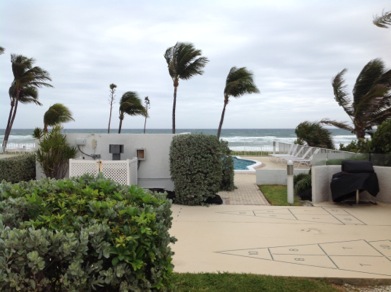
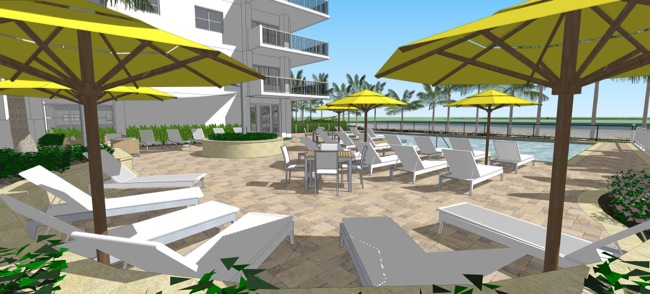
The pool house located in the heart of the South deck area is a physical encumbrance and it is structurally failing and in significant disrepair and has accumulated 44 years of chlorine infiltration into the concrete structures. This house could be removed for structural and mechanical reasons alone, but in addition it offers substantial architectural and design benefit when it is gone. In fact, its removal is a huge and pivotal game changer. It is demanding 20-30K just to repair and replace its contents and it would still be a huge encumbrance. Does it make sense to waste money this way in a perpetual band aiding process? Modern efficient mechanical equipment could simply be relocated to a safer more secure area which would not only allow the equipment to have an extended and longer life and therefore save us money long term but it would also provide us with a far quieter pool deck area and make routine maintenance by our staff and any future repairs so much easier and safer to access.
Most importantly the South Deck is where our maximum ROI lives. It is this area which is the most visible and accessible outdoor space physically on our property. $7k per unit invested toward a modernized south deck is likely the highest ROI we might ever enjoy at 3000. An outside independent and well regarded real estate seller of condos in 3000 who viewed the proposed south deck design plans and compared them against our current south deck and pool area mentioned a substantial ROI would be realized through the south deck pool project. The return may likely increase unit values exponentially. A feasability study can be conducted to project the impact of these replacements and improvements.
An engineering study has been ordered and conducted to properly evaluate the South Deck and Pool and related mechanical systems.
It should be noted by all owners there are numerous logistic overlaps for the North Deck project that depend on the South Deck plans. Though the South Deck project will likely be delayed in its execution, certain decisions should still be made by the Directors ASAP during the North Deck renovation phase to accomodate many of the design and infrastructure needs of the South Deck project or else face the consequences of redoing numerous aspects of the North Deck and adding costly retrofits to the project that should be pre-planned and included during the North Deck remediation.